


Neue Seite 3

.

> Home <

Please have a look in our

FORUM


Our helper at work!


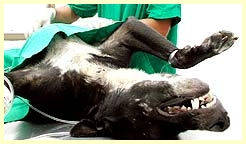
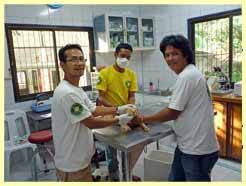
Auf dem Operationstisch


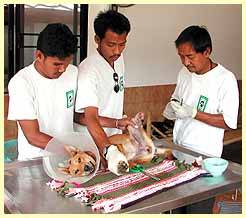
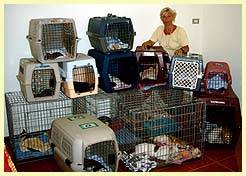
Today was cat day. We carried out 10 male and 6 female cats from a temple.


Unser Neuzugang Tom


Impf-Aktion am Strand von Chaweng


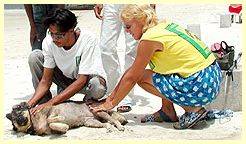
Erste Hilfe am Strand


Dr. Somsak visits Silvana in Switzerland


Allison spoon-feeding each dog in turn


THE DRCS CLINIC FOR DOGS AND CATS

Since April 1999, thanks for DRCS, there has been a vet on Koh Samui to help all stray, injured and sick dogs and cats. This was only achieved with the help of animal friends as the basic equipment and running expenses for a clinic are very high. Dr Somsak (our vet) and two helpers were employed by the DRCS. Dr Somsak started working for DRCS at the end of 1999 and in January 2000 he opened his own practice in Chaweng. In March 2000, we employed Dr Sarawoot and Dr Boy but they wanted to pursue more independent work and I was not unhappy when they quit in September 2000. From October 2000 until June 2003, all stray and ill dogs were taken to Dr Somsak. We had to pay the same price for treatments as everyone else on the island. This was a good idea at the time as we only paid for actual work carried out on the dogs and were spared the overheads of the full-time salary of a vet. Dr Somsak spayed two dogs every day for us and we had a good working relationship with him. Dr Somsak sold us the medication and vaccines at a good price and explained to us in great detail about the different illnesses and provided good advice on the treatment of our animals. DRCS has always paid for the castration and medication for the Thai people who could not afford it. In April 2003, we finished work on the shelter at Baan Taling Ngam with its own operating room. It made sense, therefore, to employ a full-time vet again so full use could be made of our new facilities. Because we were able to have our own vet, we were able to include regular castrations and operations on the Island's cats. Since 13 July 2003, we have had our own vet.

For more Info about vets, please see WHO WE ARE


PREVENTION

To control the breeding of dogs, Dr Somsak spayed at least two bitches for DRCS every day. Male dogs were only castrated if there was a particular reason for doing so. We paid between 25 and 30 Euros per castration. More castrations couldn't be carried out as Dr Somsak didn't have the time and DRCS couldn't afford them. DRCS pays for castrations and medical treatment when the owners do not have enough money. When our animal shelter was completed, we were able to employ our own full-time vet who carried out around six castrations a day; that was three times the amount of castrations carried out before, and at a lower cost. Here you can view a list of all operations

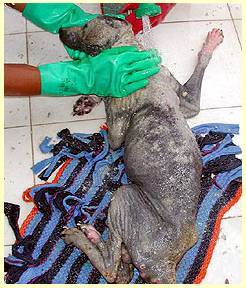
We printed fliers in Thai and English to inform the locals about our 'special offer' to spay stray dogs and cats for free. We continue to rely on  the locals to help us catch as many stray dogs and cats as possible.  Castrations and sterilizations are the only effective method to control the number of dogs and cats. One pair of dogs will produce 16 puppies in one year, and if these also have offspring, the number rises to more than 500 puppies over three years. The Humane Society of the United States (HSUS) estimates that a pair of breeding cats and their offspring can exponentially produce over 400,000 cats in 7 years. INJECTIONS, WORM TREATMENT AND FIGHTING MANGE. Thanks to DRCS, Koh Samui is the only rabies-free area in the whole of Thailand. Dogs suffering from mange are treated by our helpers with Ivomec injections or Amitraz baths. Rabies injections (which are often carried out on the beach) and de-worming are also part of their tasks. Take a look at our DOG STORIES If you would like to get a better idea of what our team has been able to achieve for the miserable creatures which have been brought to us. Many of the dog and cat stories you can also find under

DOGS AND CATS TO SPONSOR. 


Daily doses of medicine for various dogs


Das neue Hundehaus

LARGE KENNEL

Between 1999 and 2002, we took in about 120 sick and injured dogs which could not be taken back to the beach or from whence they came. These are either old and weak animals who could not fend for themselves or puppies which were dumped at the clinic without their mothers. Some of the dogs could not be taken back because hotel owners had threatened to poison them. Many of our patients are nothing more than a bundle of bones, covered with injuries and without any fur. These animals have to stay because their chances of survival, without our help, are nil. We started to run out of space for the dogs so our next aim was to erect a large kennel. Until then, all the dogs were living on our premises, next to the house. Our 'garden' is only 300 square meters and that is far too small to house 60 dogs. The kennel (4 x 7 meters) is also in our 'garden' and that was donated by Silvana Ruh. Khun Ying and Khun Bäh (the owners of Montien House on Chaweng Beach) donated the land. Many dogs, that could not be taken back after castration or medical treatment found a new home in the big kennel. Unfortunately, the number of dogs that could not be taken back grew bigger and bigger and it became urgent to find a new space for these animals. The whole garden was full of dogs and it became impossible to open the door on to the terrace as there were some 40 dogs outside vying for the best places. The front part of our land was separated from the garden by fences so it was possible to keep the dogs in two groups. The weaker ones mostly resided on our terrace and in the garden. A short time before we moved the dogs to the shelter in Ban Taling Ngam there were 40 dogs on the terrace and 60 in the front and the animal house. Today, the garden is inhabited by our cats, separated by the fence from the dog area. We did not take in any cats until after 2002. We moved around 80 dogs from Chaweng to the shelter in Ban Taling Ngam. Today (January 2006), the only dogs I keep around my house are those which are too sick or old to live at the big shelter and the ones which need daily medication. I did have a dream that, when the big shelter opened, I would not need to have any dogs here and could have a lovely big garden but it doesn't look if that's going to happen! Doesn't matter. Although we built the big kennel for the dogs, the cats' hospital continues to be my house and currently (2007) I have some 50 of them living with me


Das zukuenftige Hundeparadies.

Der Bagger ebnet die Zufahrt zum Land.

Brigitte vor den ersten Metern der Mauer (14.10.02)

Die ersten grossen Hundehuetten entstehen

Don spielt mit den Hunden

Pong versorgt die Hunde

Olivia verteilt Streicheleinheiten

Das Haus mit 2 Wohnraeumen, Bad, OP, Lagerraum und offener Kueche

The open kitchen

The new operationroom


DOG SHELTER

On 3 May 2002 it finally worked out! Our president, Khun Theerasud Chaichalremwong, purchased the land (7,200 square meters) for DRCS at a cost of 785,000 Baht (almost 20,000 Euro). The money to build the new dog shelter was collected by Silvana Ruh in Switzerland, and  all animals which cannot be taken back after castration or medical treatment are given a permanent place to stay at DRCS. The land is located in the southern part of the island in Ban Taling Ngam. As you can see on the picture to the left not happened quickly for a few months In Thailand>, every thing takes time and you have to apply other standards, otherwise you will never feel at home. Things finally got started and the excavator arrived and, on 1 October 2002, we finally started the construction. 30 large palm trees were felled and removed and, over the forthcoming weeks, a 500 meter long wall was constructed with more building work still outstanding.

Help us to do this by donating 1 metre of wall for 25 Euro! 

Help us to build the wall for the dog shelter.

1 m costs 25 EURO!

Later we will put your name on the wall.

HERE  you can see our current sponsors!

On 15 November 2002, the first enclosure for the dogs was ready! An area of 1400 m² was walled off with double doors. Huts for the dogs have been erected with 60 bamboo benches. On 20 November 2002, we moved the first 22 dogs to the new premises. We did this with the help of our dog friends, Dany and Farid from DIVEPOINT (Go diving with DIVEPOINT!) The dogs settled down nicely and the rest of the healthy dogs were gradually moved there. The dogs get fed every morning and afternoon and receive regular health checks.   On 1 April 2003, exactly 4 years after the founding of DRCS, the animal shelter at Ban Taling Ngam was opened. The house and surrounding area are also completed as you can see on the pictures to the left.

The house is 20 metres long and 4 metres wide. We have a living room (4 x 4 metres), bedroom (3 x 4 metres), operation room (4 x 4 metres), storeroom (4 x 4 metres), and a bathroom (2 x 4 metres). We also have an outside kitchen in which we sit with visitors and helpers.  Come and have a look at the shelter! We also created two walled enclosures about 800 m2 each, one of which was used to shelter many puppies and female dogs. A third enclosure was for the dogs which only stay with us temporarily after castration or other operations. Olivia moved into the house on 15 April 2003, and took care of the feeding and cleaning of the dogs. She lived there for one year before moving back to Switzerland. Since then, the vet has resided there. During the times we do not have a vet (unfortunately that happens often), Rid lives there. Rid is one of our helpers who lives in Ban Taling Ngam. The picture below shows Silvana from Switzerland on a part of the wall that has already been painted. Silvana donated the money for the land. Without her help it would not have been possible for DRCS to have achieved so much. Many thanks to Silvana.


There is still a lot of remaining wall that can be purchased for 25 Euros a meter. We will write your name or whatever you want on the wall (in Thai too)! If you are on Samui, you can do it yourself!  It's never too late to sponsor a meter of our wall. Genevieve from the USA spent many hours beautifying our wall with paintings of our dogs and cats.


We continued with our construction projects (depending on the amount of money we had available) and currently have ten large enclosures for the dogs. Seven of those are enclosed by walls and three by fences. The dogs prefer the ones with the fences because they can get more easily in contact with visitors. Most of the dogs settle down well in the large enclosures. Unfortunately adoptions on the island do not happen often. The Thais prefer poodles or white dogs. We have built more single cages. Up until the end of 2005, we had 44 single cages for post-operative dogs. These are also the temporary lodgings for dogs with large wounds or very sick dogs. Recently, we constructed some double cages (180 cm by 150 cm) and up to three dogs can easily fit in these. The cages are constantly occupied. When money allows, we will build more cages.  

ALL DOGS AND CATS HAVE TO STAY WITH US AFTER NEUTERING FOR AT LEAST ONE WEEK UNTIL AFTER THE STITCHES ARE REMOVED.

 Many animal welfare groups in Thailand and other parts of the World throw the animals back out to the street after one day. This means for many of them a slow and painful death! Dogs and cats are unaware that they will die for sure if they remove their stitches themselves. The mass neutering events executed by many organizations with the help of foreign veterinarians do not make any sense to me because all that counts is the number of castrations, but what good does it do if 100 animals are castrated in one day and many of them die afterwards because the proper care afterwards (for at least one week) is missing. Whenever I hear about such mass neutering events, I become sad as I know from experience how stupid dogs and cats can be. The people who do this to the animals, are just as stupid and they do not realize how much suffering they can cause by their well-intended neutering. I have seen wounds infested with maggots after castrations and I know what I am talking about. The animals are slowly killed by the infections caused by the maggots! You can imagine how painful this must be for the dogs and cats. Animal welfare groups that execute such mass castrations, are even proud of what they do to the poor animals!

The main thing is that the statistics sound good!  


The cat room

Within the last few years, more and more cats were adopted at the animal shelter and it became vital to build a house for the cats. The room (4 meters by 4 meters) originally designed as a storage room, was used for the cats which had to stay at the shelter until adoption or forever.   Furthermore the sick cats and the cats which have to stay with us for one week after castrations, needed to stay there in cages.    


This is our new cat house. We have a lot of space to play, a big terrace and a beautiful garden. Ow and Dilek (who has now left us) fitted the shelves. In the picture, the shelves are a bit lop-sided (Thai style) but have since been adjusted. 


The cat house

The outdoor enclosure that was especially built for our cats, is beautiful during sunshine but, when it rained, the cats had to squeeze into the little room. In this room there >are also 20 cages for the newly operated upon cats. You can imagine that this led to fights among the usually peaceful cats and some of them had to stay outside in the rain. In contrast to the unfinished quarantine ward for the puppies, the cat house is now finished. It came as a surprise to me that construction work started the same day I gave the order and that it went ahead unbelievably quickly. This is very unusual for Thailand! Less surprising though, was the creativity of the site manager. He must have held the plans upside down and he simply ‘forgot’ to create one of the doors! I complained a couple of times but the workers only put me off. It was only when the plaster work was about to begin that the workers took a big fretsaw and cut out a door in the brickwork! Since September 2005 our little tigers have had a house with two rooms (40 sq.m. including the terrace) and a garden (about 240 sq.m.) which invites them to play and romp around. The garden isn’t so well-attended during the rainy season but baskets, rattan furniture and polystyrene boxes constitute the scratch paradise inside. I’ve also had some shelves installed which has created lots of space for rest and recuperation. This oasis for our little tigers is perfect and I can safely say that they are in the best of health and very happy with their new home. The old outdoor enclosure was connected with the new outdoor enclosure and the cats still love to peek through the window and look at the cats in the catroom.


BOXES FOR THE CATS

In October 2007 we received a generous donation of 4000 Euro from the SOS Animal Care in Binningen, Switzerland and only because of this donation we were now able to build the 21 tiled boxes (90x90cm). With the new single boxes built, the sterilisation and cleaning in general has become so much easier and therefore we're positive to be able to get virus infections more under control.

A big thank you to the donor from Switzerland

Especially our volunteers were more than happy that we finally built separate cat-boxes as they never had enough space for the new puppies. Fortunately the death rate of the puppies has been reduced dramatically and therefore I hope that we can achieve the same with the cats.


We puppies must snack very often. We do not only share a bowl …


… but also our bedroom.

We now life in our new home and even the food tastes double as good here.

...and we've got plenty of space to play around!


Puppies, puppies and even more puppies … 

As the number of sick adult dogs decreases, the number of puppies grows. Many are dumped at night in front of the shelter or I receive phone calls from tourists who have picked up injured or sick puppies. At the moment we have around 30 of the little ones who, sorry to say, go down like flies. Puppies are prone to diseases which they pass to each other. The parvo- and distemper viruses are endemic and linger in the soil. Many of the puppies arrive sick at DRCS and it is not possible to separate them all as we do not have enough single boxes to accomplish this effectively. We are about to build a new puppy shelter. Currently, we’ve isolated four double boxes at the back of the shelter with two fences. The boxes (150 cm x 180 cm) can be opened as needed and the puppies can run around in the area in front. The next step is to concrete that area to reduce the number of germs settling in the grass and soil. We will try to keep the boxes and square as germ-free as possible with as much disinfection as we can get. This is just a temporary solution and I hope we will be able to build a puppy house in 2006 I was of the opinion that a puppy house wouldn’t make sense as the helpers couldn’t maintain the rules of hygiene. However, I’ve changed my mind and hope to reduce the puppy mortality rate by building a house for them. By fining and controlling the staff, I hope to get a grip on the importance of hygienic conditions. The staff can each get up to 1,000 Baht extra a month if they do their work properly! The basic salary is 7,000 Baht a month but some get more because they are more diligent and interested to learn.

THE PUPPY HOUSE

With your help we have made it! On 25 June 2006 construction work on the puppy house began. This major item of expenditure was only made possible by generous donations from Brigitte and Peter in Erkrath, Alex and the Art ´n` Style Tattoo Studio in Schweinfurt, the Marchig Trust in England, and Karen from St Anne`s, England. Thank you very much! 

Construction work forged ahead rapidly. The building time was estimated at 50 days and the workers set a brisk pace so I had to go to the shelter almost every day in order to supervise the construction and to marvel at the progress. Already on 25 August 2006 the puppies moved in to their new palace. 

The house measures 7 x 9 metres and comprises four small rooms and a terrace of 24 square metres. Around the terrace is a 70 cm high wall on which is a bench for visitors to sit. The house is tiled up to 90 cm high and has a gutter in front of the rooms. We hope to decrease puppy mortality due to these improved hygienic means.

Just come by and visit the little rascals. They are very cute and I suspect that visitors will not see much of the rest of the shelter due to lack of time. 


We now reside in our new palace. The food tastes twice as good and we have a lot of space to romp around. 


THE PUPPIES - QUARANTINE STATION

It turned out that the building of the puppy house alone, was not enough to prevent the death of many puppies brought to the DRCS. New arrived puppies-with or without a mother, have to be isolated at first. 4 rooms were not enough. The rooms are made for the mothers with the puppies or for a group of little ones but not for single puppies. We still have a lot of puppies brought to the DRCS by their own, or we get in a group of puppies where the mother was nowhere to be found. We sometimes find abandoned puppies outside the gate, in a little box.

The WSPA financed the badly needed quarantine station of 20 single boxes (90 x 90 x 90 cm) for the puppies, which we built in May 2007. The quarantine station has been built right behind the puppy house and the caretaking of the little ones has become much easier now.

Thanks to the new quarantine station, fortunately we've been able to dramatically reduce the death rate of the puppies.


The quarantine station is directly behind the puppy house. On the right side you can see the entrance.


The entrance is always well guarded

We have 44 single boxes for sick dogs or the dogs staying with us for one week after the sterilization/castration.


That's how the shelter looks today: February 2008

The house is 20 metres long and 4 metres wide. We have a living room (4 x 4 metres), bedroom (3 x 4 metres), operation room (4 x 4 metres), storeroom (4 x 4 metres), and a bathroom (2 x 4 metres). We also have an outside kitchen

Cat house


Puppy house


Operation room - here we do 6 sterilizations every day


Outside compound

Outside compound


THE POOL

In May 2003, Kirsche and Nick from UK came to visit us to help out for a couple of days; they stayed for five weeks! They had so much fun, they decided to build a swimming pool for the dogs. We have three compounds at the big animal shelter and the swimming pool was put in the biggest one (1,200 sq.m.)  where we have the largest and strongest dogs. Nick and Kirsche worked extremely hard on the swimming pool. The ground is very stony and, as the drain was being constructed, a large stone blocked the way so another drain had to be constructed. Because that took extra time, Nick and Kirsche had to go home. However, Rob from Ireland and Steffen from Germany finished off the roof and are just about to seal the pool so we can fill it with water. As usual, all our volunteers had a great time working at the shelter, surrounded by all the dogs.


Installation of the posts for the roof of the pool (note the dogs are helping as usual)


5 Hunde auf dem Weg nach Deutschland


DOG TRANSPORT

Many tourists visiting Koh Samui fall in love with a particular dog and cannot bear to leave it behind on the island. Unfortunately there is only a very small number of hotels which tolerate or even feed strays. The chances of meeting the same dog when returning to Koh Samui are slim.

Please do have a look at the page dog transport. There you can see the most beautiful pictures from dogs and cats in their new homes.


            Last update 30.06.2008 17:53:54